Understanding L1 Visa Requirements: A Comprehensive Guide for Global Professionals
Guiding through the complexities of the L1 visa procedure is essential for worldwide professionals going for intra-company transfers to the united state. This visa uses two crucial categories, each with unique requirements. Recognizing eligibility standards and the application procedure can substantially affect the end result. Lots of face obstacles along the means. What are the essential steps to assure a smooth journey with this elaborate procedure? The answers lie in advance.
Introduction of the L1 Visa Categories
While guiding through the complexities of U.S. immigration, it is necessary to recognize the different groups of the L1 visa, which is made for intra-company transferees. The L1 visa incorporates two primary classifications: L1A and L1B. The L1A visa caters to executives and managers, enabling them to move to a united state branch, associate, or subsidiary of their company. This category is specifically useful for people in management duties, as it permits a much longer period of remain, typically as much as seven years.
Conversely, the L1B visa is planned for staff members with specialized understanding, highlighting their competence in the firm's solutions, items, or procedures. L1 visa requirements. This category permits a remain of as much as five years. Recognizing these differences is essential for business and specialists maneuvering the L1 visa procedure, guaranteeing they select the suitable group based on their roles and responsibilities within the company
Qualification Requirements for L1 Visa Applicants
Additionally, the funding employer should keep a certifying connection with the international entity where the applicant was formerly used. This relationship can be a moms and dad firm, affiliate, subsidiary, or branch. Applicants must also mean to operate in the U.S. in a similar supervisory or specific role upon approval of their visa.
Needed Documents and Application Refine
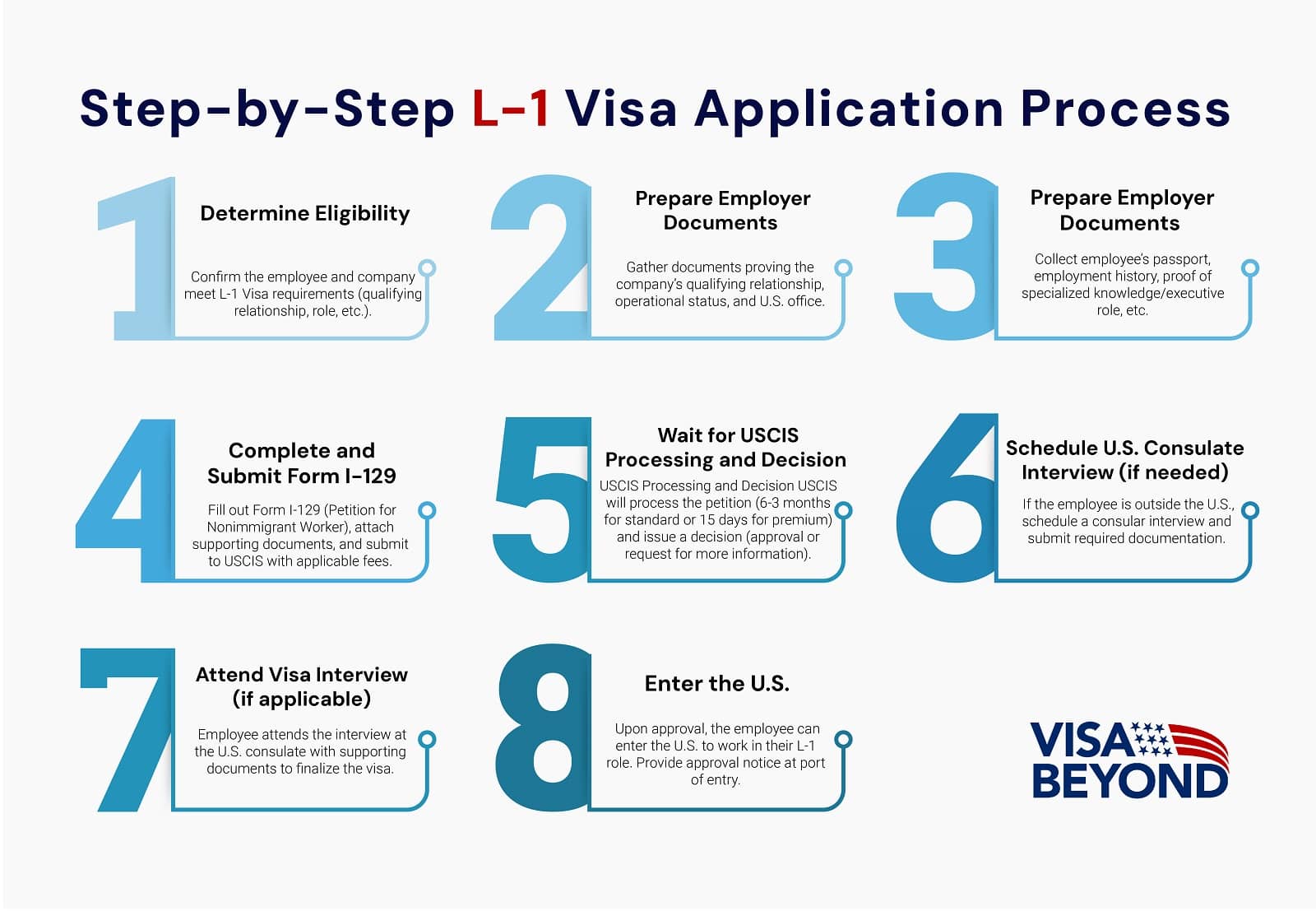
A comprehensive set of paperwork is necessary for candidates seeking an L1 visa. The procedure begins with the completion of Form I-129, a petition for a nonimmigrant worker, which must be submitted by the united state employer. Accompanying this kind, candidates require to offer evidence of the qualifying partnership between the U.S. and international employer, such as tax obligation returns or business charts. Evidence of the candidate's employment history, including job summaries and duties, is likewise required to demonstrate certifications for the desired position in the united state
In addition, candidates must submit their ticket, pictures, and any type of previous U.S. migration files. As soon as the application is approved, applicants have to attend a visa meeting at a united state consulate or consular office, bringing all sustaining files. This careful documentation assurances compliance with U.S. migration legislations and helps with a smoother application procedure for prospective L1 visa holders.
Period of Stay and Expansions
The duration of keep for L1 visa owners varies relying on the details group of the visa they possess. L1A visa owners, typically managers and execs, are approved a first stay of as much as 3 years, with the opportunity of extensions up to a maximum of 7 years. On the other hand, L1B visa holders, that have specialized knowledge, are enabled an initial stay of approximately three years, however can expand their remain for a maximum of five years.
Extensions need to be gotten prior to the visa expires, and the process calls for the company to show the requirement of the worker's continued presence in the U.S. It is important for employees and employers to adhere to the laws concerning period and extensions to avoid any kind of possible legal difficulties. Remaining informed about the timelines and needs is essential for keeping L1 visa standing and ensuring compliance with united state migration laws
Common Obstacles and Tips for Success
Guiding with the complexities of the L1 visa process can offer various challenges for both workers and employers. One usual difficulty is the documents called for, which typically requires thorough focus to information. Applicants should guarantee that their task summaries straighten with the specialized understanding standards, which can bring about confusion and misinterpretation. Additionally, the timeline for authorization can be uncertain, creating anxiety for those waiting for moving.
To boost opportunities of success, it is a good idea for candidates to speak with migration lawyers that specialize in L1 visas. This specialist support can assist browse lawful nuances and prepare a strong application. Employers must also ensure proper internal interaction, straightening HR plans with L1 visa demands. Ultimately, maintaining organized records and prompt entries can considerably relieve anxiety during the application process, leading the means for a smoother modification for all parties included.
Regularly Asked Concerns
Can Household Members Accompany an L1 Visa Holder?
Yes, family participants can come with an L1 visa holder. Partners and single youngsters under 21 years of ages are eligible to make an application for L2 visas, permitting them to live and study in the United States.
What Is the Difference In Between L1A and L1B Visas?
The L1A visa is for supervisors and executives, while the L1B visa is for staff members with specialized expertise. Both permit intracompany transfers, however the L1A usually uses a broader series of chances for advancement.
Exist Particular Work Titles Required for L1 Visa Approval?
Details task titles are not mandated for L1 visa authorization; nonetheless, candidates need to demonstrate that their roles align with managerial or specific expertise positions. Appropriate experience and company framework play necessary roles in the approval procedure.
Can I Switch Over Employers While on an L1 Visa?
Changing companies while on an L1 visa is normally not allowed. The visa is connected to the particular Recommended Site company and duty. A new company would need a separate L1 request for approval.
Is There an Allocation for L1 Visa Approvals Yearly?
There is click here to read no yearly allocation for L1 visa authorizations, permitting eligible individuals to apply without the restraints of a numerical limit. This flexibility sustains international firms in moving employees as needed throughout the year.
